News
Attackers used a Cisco Expressway flaw to take root and reach an internal network.
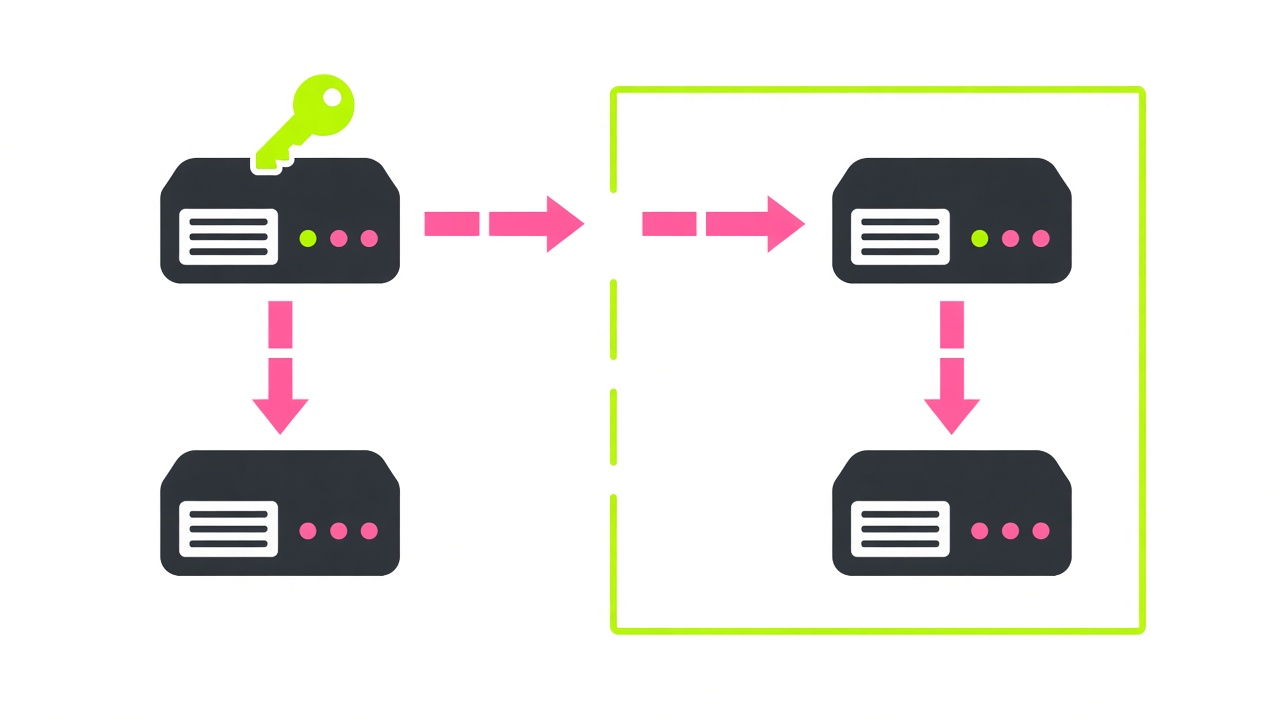
F6 says attackers used a critical Cisco Expressway bug to gain root on two internet-facing devices at a Russian organization, then reached two more cluster nodes on the internal network.
Impact
- What was impacted
- Cisco Expressway, CVE-2026-76466, rated 9.8. Cisco says an unauthenticated attacker who can reach the device can run operating-system commands as root. Cisco attributes it to persistent cookies, and to client certificates that are not checked when TLS Verify Mode is set to Enabled for clustering. F6 says attackers used a public proof of concept against Cisco Expressway X15.5.3 devices.
- Who was impacted
- Operators of Cisco Expressway, especially internet-facing appliances and clusters. F6 describes the intrusion at one Russian organization. The activity is not attributed to a named group.
- What you need to do
- Install the October 21, 2026 fixes. For Expressway X15.5.3 and earlier, Cisco names X15.5.20. For X14 and earlier, Cisco says to migrate to a fixed release and does not name that build here. Then look for wombat@127.0.0.1 in erlang.log, Python scripts under /mnt/harddisk/ in the folder pattern F6 published, and contact from 66.179.31[.]32 or 18.130.47[.]116. Isolate a device that matches. Check for follow-on access to SMB shares, SQL Server, WinRM, and GitLab.
Cisco says CVE-2026-76466, rated 9.8, lets an unauthenticated attacker who can reach a Cisco Expressway device run operating-system commands as root. Cisco says the flaw comes from persistent cookies, and from client certificates that are not validated when TLS Verify Mode is set to Enabled for clustering. An attacker who has those cookies can connect to the database service and invoke remote procedure calls. This brief does not include those calls. Cisco released fixes on October 21, 2026. For Cisco Expressway Series Release X14 and earlier, it says to migrate to a fixed release and does not name that build. For Release X15.5.3 and earlier, the fixed release named here is X15.5.20.
Russian company F6 says this appears to be the first use of the flaw in the wild, and that it followed a public proof-of-concept exploit. The attackers compromised two internet-facing Cisco Expressway devices running X15.5.3 and gained root. Through one of them they reached two additional cluster nodes on the organization's internal network. The report is about one Russian organization. F6 does not name the group.
After root access, F6 says the attackers tried to move further inside the network. Custom Python scripts scanned the network, looked for accessible SMB shares, interacted with SQL Server and WinRM, and opened GitLab repositories to take credentials and other data. F6 says comments in the scripts, including notes describing fixes, suggest the code may have been written with help from AI tools. That is F6's reading of the comments.
F6 published three things to look for. The addresses are 66.179.31[.]32 and 18.130.47[.]116. The Erlang system log erlang.log on an affected Expressway contains the string wombat@127.0.0.1. Python scripts were staged under /mnt/harddisk/ in folders matching i, four digits, an optional letter, then a .py file. Update to the fixed release Cisco names for your train, isolate a device that matches those signs, and look for the lateral movement F6 describes. F6 also says a perimeter device can be a path to other systems, so segmentation and monitoring matter after the patch. Do not run the public proof of concept.
For your AI agent
Agent instructions — copy paste to Claude
You are helping me respond to CVE-2026-76466 in Cisco Expressway, which F6 says was used to gain root on Expressway devices and reach an internal cluster. Do not write or run an exploit, a proof of concept, or the public proof of concept. Do not connect to the Expressway database service or send remote procedure calls to test the bug. Do not reconstruct the Python scripts. Ask before installing a patch, isolating a device, blocking an address, or changing cluster settings.

Facts from the report:
- CVE-2026-76466 is rated 9.8. Cisco says an unauthenticated remote attacker with network access to a Cisco Expressway device can run arbitrary operating-system commands as root.
- Cisco says the flaw is due to persistent cookies, and to insufficient validation of client certificates when TLS Verify Mode is set to Enabled for clustering, so those certificates are not validated. An attacker who has the cookies can connect to the database service and invoke specific remote procedure calls. Do not recover or send those calls.
- Cisco released fixes on October 21, 2026. Cisco Expressway Series Release X14 and earlier: migrate to a fixed release. This report does not name that build. Do not invent it. Cisco Expressway Series Release X15.5.3 and earlier: X15.5.20.
- F6 says this appears to be the first in-the-wild exploitation, seen after a proof of concept was made public. The attackers compromised two internet-facing Cisco Expressway X15.5.3 devices, gained root, and through one of them reached two more cluster nodes on the internal network of one Russian organization. F6 does not attribute the activity to a named group. Do not invent an attribution.
- After root, custom Python scripts scanned the network, discovered accessible SMB resources, interacted with SQL Server and WinRM, and accessed GitLab repositories to take credentials and other data. F6 says comments and descriptions of fixes in the scripts suggest they may have been written with AI assistance. Do not treat that as a named malware family.
- Indicators F6 shared: 66.179.31[.]32 and 18.130.47[.]116; the string wombat@127.0.0.1 in erlang.log on the Expressway; Python scripts staged under /mnt/harddisk/ in paths matching i, four digits, an optional letter, then a .py file. Do not open or execute those scripts. Read only names and the log string.
- F6 advises updating to the latest supported version, auditing for compromise, isolating affected systems, determining scope, and blocking lateral movement. Do not disable clustering TLS verification as a fix. This report does not say to.

Context:
- What was impacted: Cisco Expressway appliances, including internet-facing devices and internal cluster nodes reached from them, plus SMB, SQL Server, WinRM, and GitLab access attempted after root.
- Who should care: operators of Cisco Expressway, especially exposed appliances and clusters.
- What to do: install the named fix for the train you run, hunt for the three indicators, and isolate a device that matches.

Do this in order. Ask before patching, isolating an appliance, blocking an address, or rotating credentials. Prefer read-only inventory first. Do not write or run an exploit or a proof of concept.

1. Inventory
   - List Cisco Expressway devices and record the release. Flag X15.5.3 and earlier, which this report says to move to X15.5.20. Flag X14 and earlier as needing a fixed release this report does not name. If a release is outside those two lines, say this report did not name a build for it.
   - On each Expressway, search erlang.log for wombat@127.0.0.1. List file names under /mnt/harddisk/ that match the script path above. Do not open or run the files.
   - Note any connection involving 66.179.31[.]32 or 18.130.47[.]116. Do not contact those addresses.
   - Ask whether SMB shares, SQL Server, WinRM, or GitLab showed unexpected access after the Expressway dates you are reviewing. Do not scan the network yourself.
2. Contain
   - If the log string, the script path, or either address is present, propose isolating that Expressway from the rest of the network. Ask before changing access. State that isolation is containment, not the Cisco fix.
   - Propose blocking the two addresses. Ask before changing a filter. Do not propose a broad block of every address in those ranges.
3. Remediate
   - Plan the October 21, 2026 fix: X15.5.20 for X15.5.3 and earlier. For X14 and earlier, plan a move to a fixed release and stop if the build number is not in a Cisco advisory in front of you. Ask before installing.
   - If GitLab or other credentials may have been taken, propose rotating those credentials after the device is contained. Ask before rotating. Do not invent which accounts were stolen if the logs do not say.
4. Verify
   - Confirm the installed release only after a change you were asked to make.
   - Confirm the log string and script path are absent, or still present if you were not asked to clean the device.
   - Confirm the two addresses are blocked only if you were asked to block them.
5. Report back
   - Versions found, which indicators matched, what you changed, and what you left because this report did not name a build or a stolen account.

Do not invent CVEs, fixed builds, or threat-group names. If a check needs access I have not given you, say what you need and stop.