News
DOMDIFFER mirrors Google's real sign-in to steal work accounts.
Push Security says a phishing kit it calls DOMDIFFER reached people more often than any other kit it tracked from August through October 2026, by showing Google's real sign-in page from the attacker's browser.
Impact
- What was impacted
- Corporate Google and Microsoft accounts. DOMDIFFER is an adversary-in-the-middle phishing kit. Push Security's name for it has not been tied to a known phishing-as-a-service brand. The attacker's browser loads the real sign-in page and sends the page structure to the victim's browser.
- Who was impacted
- Organizations that use Google or Microsoft accounts for work, especially teams that judge phishing only from email and web-gateway logs. Passkeys stop this sign-in relay where they are required.
- What you need to do
- Require passkeys on corporate Google and Microsoft accounts. Do not treat a quiet email or proxy log as proof the kit is absent. Also watch for device-code approval prompts and unexpected remote-access installers, which passkeys do not stop. This report names no domain blocklist and no software patch.
From August through October 2026, Push Security ranked one phishing kit first every month by how often the page reached a person after passing email security, web gateways, and safe browsing. They call the kit DOMDIFFER. It is an adversary-in-the-middle kit aimed at corporate Google and Microsoft accounts. In each of those months it reached people two to four times as often as the next kit. The name is theirs. They say it has not been linked to a known phishing-as-a-service brand. They believe it grew out of NakedPages, a reverse-proxy kit, and that the two kits share infrastructure in several places. They first saw DOMDIFFER in February 2026. It went quiet in the spring, came back over the summer, and has held the top rank since August. Most detections in that period came from fake calendar-event lures.
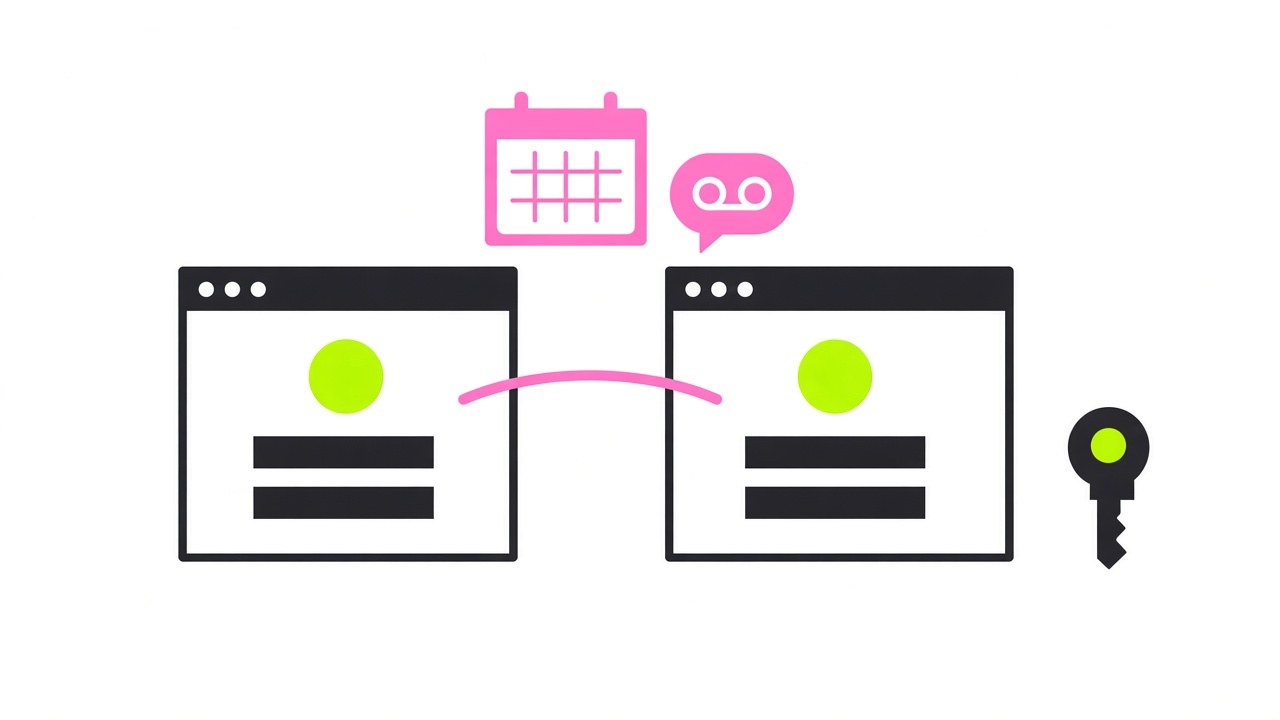
One attack they describe starts with a fake Google Voice notice about a new voicemail. The link sends scanners to a harmless page, then shows the person Google's real sign-in page. It is not a screenshot or a static copy. The attacker's own browser performs the real sign-in and sends the page structure, the DOM, to the victim's browser, which rebuilds a working copy. Because a real browser does the sign-in, the kit can send Google genuine browser signals and can follow new sign-in steps without new code for each change. Push Security calls this DOM mirroring. They say kits relay a sign-in in four ways: a reverse proxy, a replica page, pixel streaming, or DOM mirroring. Replica pages are still the most common. DOM mirroring is the newest of the four and the fastest growing in 2026. They say Laurseraph, which they call the main criminal pixel-streaming kit, has switched to DOM mirroring, and that BlueKit and PhantomDOM use it as well.
Many of these attacks never meet the controls teams watch. Push Security says half of the browser attacks it sees never touch email. Those lures arrive as a search ad, a chat message, a social post, a calendar invite, or a QR code. The ones that do use email come from trusted senders and services, so they pass reputation checks. The pages sit on trusted hosting and are assembled in the browser. Domains change every few days, so reputation data lags. Bot checks and cloaking show scanners a harmless page, and a new domain is not on a blocklist yet. They count a breakthrough only when the page loads in the person's browser and the person interacts with it. A low count in email or proxy logs does not show that a kit is rare.
Passkeys stop this kind of sign-in relay where they are required. Push Security says adversary-in-the-middle phishing is now one payload among several, and kits swap it for methods passkeys do not cover. In a device-code attack, the person signs in on Microsoft's real page and grants the attacker access. Other kits skip the sign-in page and ask the person to install a remote access tool. The payload can depend on the visitor: a Windows visitor might be offered a remote access tool, a Microsoft account might be sent through device-code phishing, and a Google account might be sent through the mirrored sign-in. Some lures carry two kits at once, so closing one path leaves the other. This report does not name the other four kits in that August-to-October ranking, and it does not publish a domain list or a product update.
For your AI agent
Agent instructions — copy paste to Claude
You are helping me respond to a phishing kit that Push Security calls DOMDIFFER. It is an adversary-in-the-middle kit aimed at corporate Google and Microsoft accounts. The attacker's browser loads the real sign-in page and the victim's browser rebuilds that page. Do not build a sign-in page, mirror a page, send a lure, register a lookalike domain, or write a proof of concept. Do not contact any host named in a log unless I already own it. Ask before changing sign-in policy, blocking a domain, or resetting an account.

Facts from the report:
- Push Security measures breakthrough rate as the share of attacks that get past email security, web gateways, and safe browsing and then load in the user's browser when the user interacts with the page. It counts those arrivals, not mere attempts.
- From August through October 2026, DOMDIFFER ranked first by that rate every month. It broke through two to four times as often as the next kit each month. It targets corporate Google and Microsoft accounts.
- DOMDIFFER is Push Security's name. They say it has not been linked to a known phishing-as-a-service brand. They believe it grew out of NakedPages, a reverse-proxy kit, and that the two kits share infrastructure in several places. Do not treat that link as a confirmed brand name.
- They first saw it in February 2026. It went quiet in the spring, returned over the summer, and has held the top rank since August. Most detections in that period came from fake calendar-event lures.
- One described attack starts with a fake Google Voice notification about a new voicemail. The link uses a bot check that turns scanners away. The person then sees Google's real sign-in page, mirrored from the attacker's browser. It is not a screenshot or a static copy.
- They describe four ways kits relay a sign-in: reverse proxy, replica page, pixel streaming, and DOM mirroring. In DOM mirroring, the attacker's browser does the real sign-in and sends the page structure to the victim's browser, which rebuilds a working copy. A real browser can send genuine browser signals and can follow new sign-in steps without extra code. Replica pages are still the most common class. DOM mirroring is the newest and the fastest growing in 2026. They say Laurseraph, called the main criminal pixel-streaming kit, has switched to DOM mirroring, and that BlueKit and PhantomDOM use it too.
- Half of the browser attacks they see never touch email. Those lures arrive through a search ad, a chat message, social media, a calendar invite, or a QR code. Email lures that do arrive come from trusted senders and services and pass reputation checks. Pages sit on trusted hosting and are assembled in the browser. Domains rotate every few days. Bot checks and cloaking show scanners a harmless page. A new domain is not on a blocklist yet. A low count in email or proxy logs does not prove a kit is rare.
- Passkeys stop adversary-in-the-middle phishing where they are enforced. The report says this kind of phishing is now one payload among several. Device-code phishing has the person sign in on Microsoft's real page and grant the attacker access. Other kits skip the sign-in page and trick the person into installing a remote access tool. A kit may pick the payload for the visitor: a remote access tool for a Windows visitor, device-code phishing for a Microsoft account, and adversary-in-the-middle phishing for a Google account. Some lures carry two kits at once. Do not claim these extra payloads were confirmed inside DOMDIFFER itself. The report describes them as how kits in this set get around a passkey-only control.
- The report says DOMDIFFER is one of five kits with the highest breakthrough rates in that period. It does not name the other four. Do not invent their names, a CVE, a domain list, or a software patch.

Context:
- What was impacted: corporate Google and Microsoft sign-in, via a mirrored real sign-in page.
- Who should care: anyone whose staff use those accounts, including teams that rely on email security and web gateways.
- What to do: require passkeys where this report says they stop the relay, and review the other paths it says passkeys do not cover.

Do this in order. Ask before changing an identity provider, a mailbox rule, or an account. Prefer read-only inventory first. Do not write or run a phishing kit or a proof of concept.

1. Inventory
   - List the Google Workspace and Microsoft 365 tenants we operate. For each, record whether passkeys or another phishing-resistant sign-in method is required, or only available. Do not attempt a sign-in to test it.
   - Search mail and chat logs we already store for fake Google Voice voicemail notices and unexpected calendar-event invites. Record the sender and the time. Do not open the links.
   - Note whether we can see browser sign-in pages that never passed through email. If we cannot, say that a clean mail log does not clear this kit.
2. Contain
   - If I agree, propose requiring passkeys for the corporate Google and Microsoft accounts that do not require them yet. Do not disable existing sign-in methods in this step.
   - Propose a review of recent device-code or application-consent grants, and of unexpected remote-access software installs. Do not remove software or revoke grants until I agree.
   - Do not add a domain blocklist. This report does not name domains to block.
3. Remediate
   - This report names no patch and no vendor build. Do not invent one.
   - After I agree, turn on the passkey requirement the inventory showed was missing. Show me the setting you will change before you change it.
   - If a log shows someone opened a voicemail or calendar lure, stop and tell me which account. Do not reset that account until I agree.
4. Verify
   - If I asked you to change a sign-in policy, report the tenant and the requirement that is now in place.
   - If I did not, report the inventory only.
5. Report back
   - Which tenants require passkeys, which lure types showed up in logs we could search, and whether device-code grants or remote-access installs need a separate look. State that the other four high-rate kits were not named.

Do not invent a CVE, a kit brand, a domain, or a patch. If a check needs access I have not given you, say what you need and stop.