News
Attackers are exploiting a critical Puppet server remote-code bug.
CISA put a Puppet deserialization flaw on its known-exploited list after reports that attackers are already running code on management servers.
Impact
- What was impacted
- Puppet Enterprise and Puppet Core report processing (CVE-2026-115731, CVSS 9.4). A client with any CA-signed agent certificate can submit a crafted report and run code on the Puppet Server as the service user. OpenVox is affected too. A related certificate-name check bypass is CVE-2026-115732 (CVSS 9.0).
- Who was impacted
- Operators of Puppet Enterprise 2026.0.0, 2025 releases before 2025.12.1, or 2023.8 before 2023.8.13; Puppet Core 9 before 9.1.3 or 8.x before 8.22.2; and OpenVox below the fixed agent and server builds. Risk is highest where the CA auto-signs certificates without a real check. U.S. federal civilian agencies have a December 1, 2026 deadline.
- What you need to do
- Upgrade to Puppet Enterprise 2026.0.1, 2025.12.1, or 2023.8.13 (Core 9.1.3 or 8.22.2), or to Puppet Core 9.1.3 / 8.22.2. For OpenVox, move to Agent 9.3.0 or 8.32.0 and Server 9.2.0 or 8.18.0. Stop auto-signing agent certificates, and if the server was exposed, treat the CA signing key as compromised.
CISA added CVE-2026-115731 to the Known Exploited Vulnerabilities catalog, citing active exploitation. The bug is unsafe deserialization in Puppet’s report-processing code. Perforce shipped fixes on November 3, 2026.
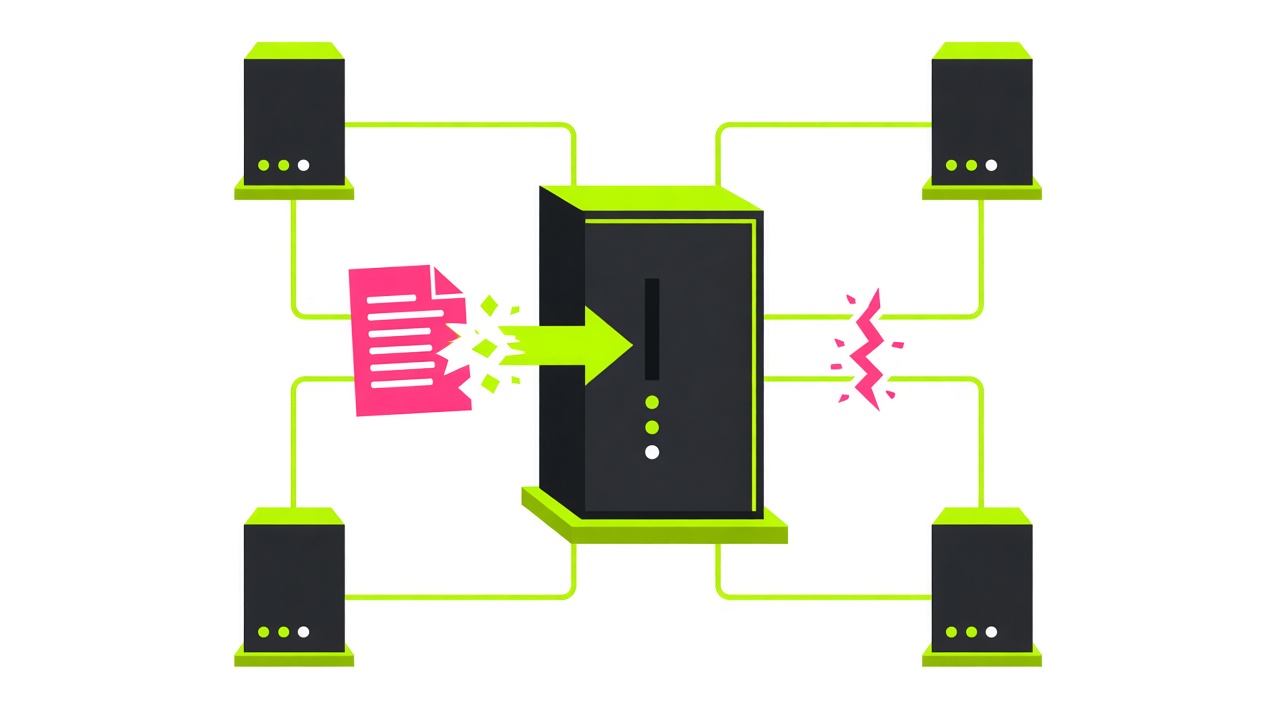
A client that already holds any certificate signed by the Puppet CA can PUT a report containing a crafted rich-data type and execute code on the Puppet Server as the service account. If that CA signs requests automatically and does not verify them, an attacker on the network can obtain a valid certificate first and then exploit the flaw without prior access.
The same issue affects OpenVox, an open-source Puppet implementation. Neodyme researcher Alain Rödel also reported CVE-2026-115732, a certificate-name authorization bypass in both Puppet and OpenVox. Code execution on the server can expose CA signing keys, which lets an attacker impersonate other hosts. Because Puppet often controls a whole fleet, that foothold can become ransomware, bulk data theft, or movement deeper into the network.
Public reporting still does not describe the exploit in detail. One operator said they traced a CVE-2026-115731 intrusion to a severely misconfigured CA shortly after disclosure. U.S. federal civilian agencies must apply the fixes by December 1, 2026, under Binding Operational Directive 26-04.
For your AI agent
Agent instructions — copy paste to Claude
You are helping me respond to active exploitation of Puppet CVE-2026-115731 (CVSS 9.4), a deserialization bug in report processing. A client with any CA-signed agent certificate can PUT a crafted rich-data report and run code on the Puppet Server as the service user. If the CA auto-signs without strong verification, an unauthenticated network attacker can get a certificate and then exploit it. OpenVox is affected. Related bug: CVE-2026-115732 (CVSS 9.0), a certificate-name authorization bypass. Perforce fixed this on November 3, 2026. CISA KEV deadline for U.S. federal civilian agencies is December 1, 2026.

Context:
- What was impacted: Puppet Enterprise / Puppet Core report processing, and OpenVox agent and server. A compromised server can expose CA signing keys and impersonate hosts.
- Who should care: fleets on Puppet Enterprise 2026.0.0, 2025 before 2025.12.1, or 2023.8 before 2023.8.13; Puppet Core 9 before 9.1.3 or 8.x before 8.22.2; OpenVox below the fixed builds. Especially where autosign is loose.
- Fix: Puppet Enterprise 2026.0.1 (Core 9.1.3), 2025.12.1 (Core 8.22.2), or 2023.8.13 (Core 8.22.2); Puppet Core 9.1.3 or 8.22.2; OpenVox Agent 9.3.0 or 8.32.0 and OpenVox Server 9.2.0 or 8.18.0.

Do this in order. Ask me before changing production servers, rotating CAs, or reissuing certificates. Prefer read-only inventory first. Do not write or run an exploit.

1. Inventory
   - List Puppet Enterprise, Puppet Core, and OpenVox versions on servers and agents.
   - Record whether the CA autosigns requests and how certificate requests are approved.
2. Contain
   - Disable or tightly restrict autosign until versions are patched.
   - Limit network access to the Puppet Server report endpoint to known agents where practical.
3. Remediate
   - Plan upgrades to the fixed builds above, then restart services so the new code is what is running.
   - If a server may already have been exploited, treat the CA signing key as exposed: plan to rebuild trust and reissue agent certificates from a clean CA. Ask before doing that.
4. Hunt
   - Review Puppet Server logs for unexpected report PUT activity and new or autosigned certificates around and after November 3, 2026.
   - Look for unknown processes running as the Puppet service user and unexpected use of the CA key.
5. Report back
   - Versions found, autosign posture, upgrades applied, whether the CA should be rotated, and what is still unpatched.

Do not invent indicators or version numbers beyond what I provided. If a check needs access I have not given you, say what you need and stop.